December 17, 2025
Parteek Singh Mahal
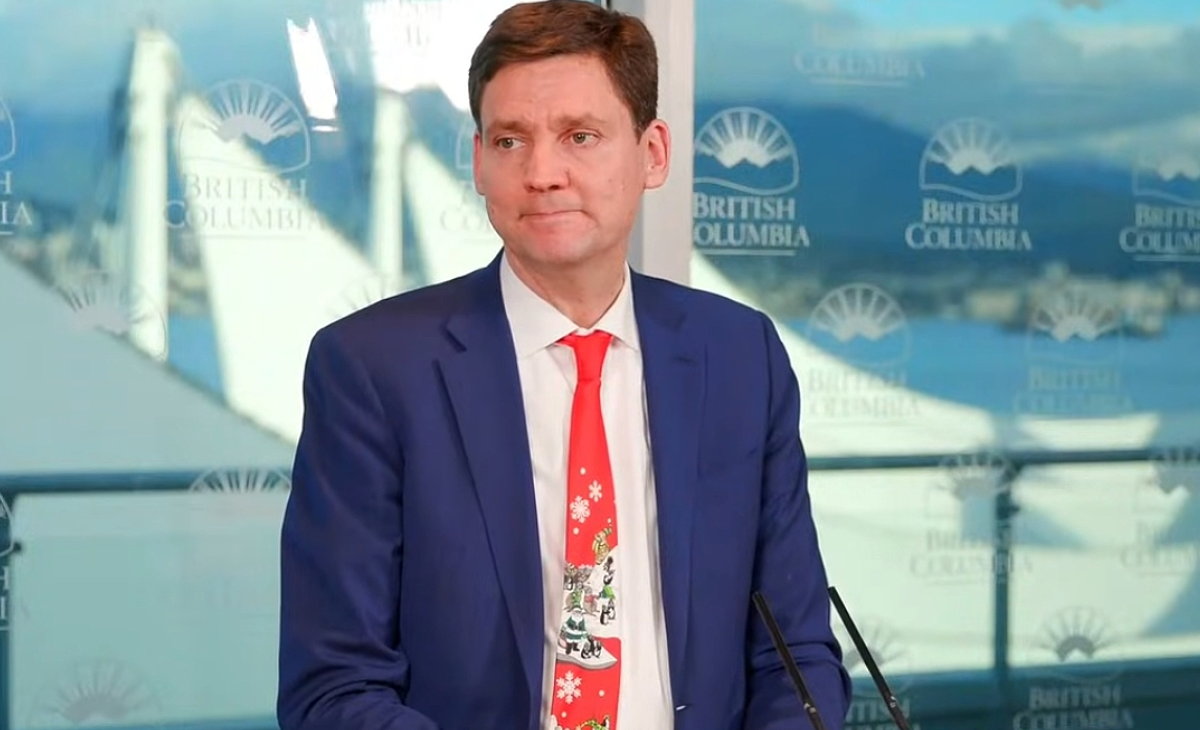
Premier David Eby on Wednesday delivered a clear message that British Columbia is no longer just a participant in the national economy—”it is prepared to lead it”.
Following a high-level meeting with the federal Major Projects Office, the Premier detailed a roadmap of industrial expansion and infrastructure hardening designed to shield the province from global volatility. While the briefing covered massive industrial gains, the centerpiece was a formal challenge to Ontario with a bid to host the proposed Defense, Security, and Resilience Bank (DSRB).
Premier Eby revealed that the province has officially written to the federal government to advocate for Vancouver or British Columbia as the ideal home for the NATO-aligned institution. The bank is designed to provide critical funding for defense and resilience projects among democratic partners.
Eby’s announcement sets up a high-stakes competition with Ontario Premier Doug Ford, who has been aggressively pitching Toronto as the natural choice for the global bank. While Ford has leaned on Toronto’s status as Canada’s financial heart, Eby argued that British Columbia offers a superior strategic advantage.
“Our position on the Pacific for our Pacific partners, combined with our robust financial sector, makes us the ideal location,” Eby stated. He framed the bid as part of a broader shift to shield Canada from global volatility, suggesting that BC’s gateway status to the Indo-Pacific is more relevant to modern security needs than traditional Eastern financial hubs.
While explaining roadmap Eby emphasized that BC’s role as a gateway to the Pacific is contingent on “trade-enabling infrastructure.” Citing the lessons learned from previous flooding in the Fraser Valley, he identified the long-term stabilization of Highway 1, the replacement of the Massey Tunnel, and the resolution of rail “choke points” like the Second Narrows bridge as existential priorities.
“If we don’t address these for the long term,” Eby warned, “impacts could last for months, disrupting trade across the entire country.”
The briefing highlighted a transformative moment for the provincial mining sector. The Premier celebrated the federal approval of the merger between Teck Resources and Anglo American. The resulting entity, Anglo-Teck, will be headquartered in the Lower Mainland.
The company has committed to a $4.5-billion investment over the next five years, targeting the Highland Valley Copper Mine and the Trail Smelter. This was paired with news from Artemis Gold, which announced a $1-billion expansion of its Blackwater Mine north of Prince George, expected to create over 3,000 combined construction and permanent jobs.
With the global economy under “direct threat” from unpredictable trade policies south of the border, Eby positioned BC’s energy sector as a key to diversification. He noted that both LNG Canada Phase 2 and the Ksi Lisims LNG project are nearing Final Investment Decisions in 2026.
“The choice is to submit to the direction put forward by (foreign leaders), or to continue to build our own way,” Eby stated. “We have chosen to diversify our partners and strengthen our national economy.”
Central to Eby’s vision is a model of “stability through partnership.” He contrasted his government’s approach of working with First Nations to secure project certainty against a “path of opposition,” which he claimed leads only to “pink slips instead of paychecks.”
As the province heads into 2026, the Premier acknowledged that while the economy remains “uneven” for some families facing high costs, the influx of billions in capital investment offers a generational opportunity to fund the public services—hospitals, schools, and doctors—that British Columbians rely on.


 Loading ...