November 17,2025
RED FM News Desk
Prime Minister Mark Carney’s minority Liberal government narrowly survived its third confidence vote in three weeks on Monday, passing the federal budget 170–168 and avoiding a holiday-season election.
Because the Liberals are two seats short of a majority, they needed support from at least two opposition MPs—or for several opposition members to abstain—if all 169 Liberal MPs backed the budget. The Bloc Québécois and Conservatives had already declared they would vote against it, creating an uncertain outcome. Two NDP MPs and two Conservative MPs abstained from voting.Two NDP MPs, Lori Idlout and Gord Johns, abstained from the vote, along with House Speaker Francis Scarpaleggia, who does not vote. Two Conservative MPs — including House Leader Andrew Scheer — initially appeared to abstain due to technical issues, but later confirmed they had voted “no.”
Aside from Idlout and Johns, the remaining five members of the seven-member NDP caucus voted against the budget.
Conservative MP Shannon Stubbs also abstained. Her office said she is on medical leave after surgery and has been instructed to remain on strict bedrest with no speaking and limited movement. Conservative MP Matt Jeneroux, who recently announced his resignation, abstained as well, as he did in the previous two budget votes.
Green Party Leader Elizabeth May initially said she was undecided, but ultimately voted in favour. She said Canadians overwhelmingly told her they wanted to avoid an accidental election, and that a “firm commitment” from Carney that Canada will meet its Paris climate targets convinced her to support the budget, despite what she called its shortcomings.
The Bloc Québécois had issued a list of demands before the budget was released, which were not met, and they confirmed their caucus would vote against it.
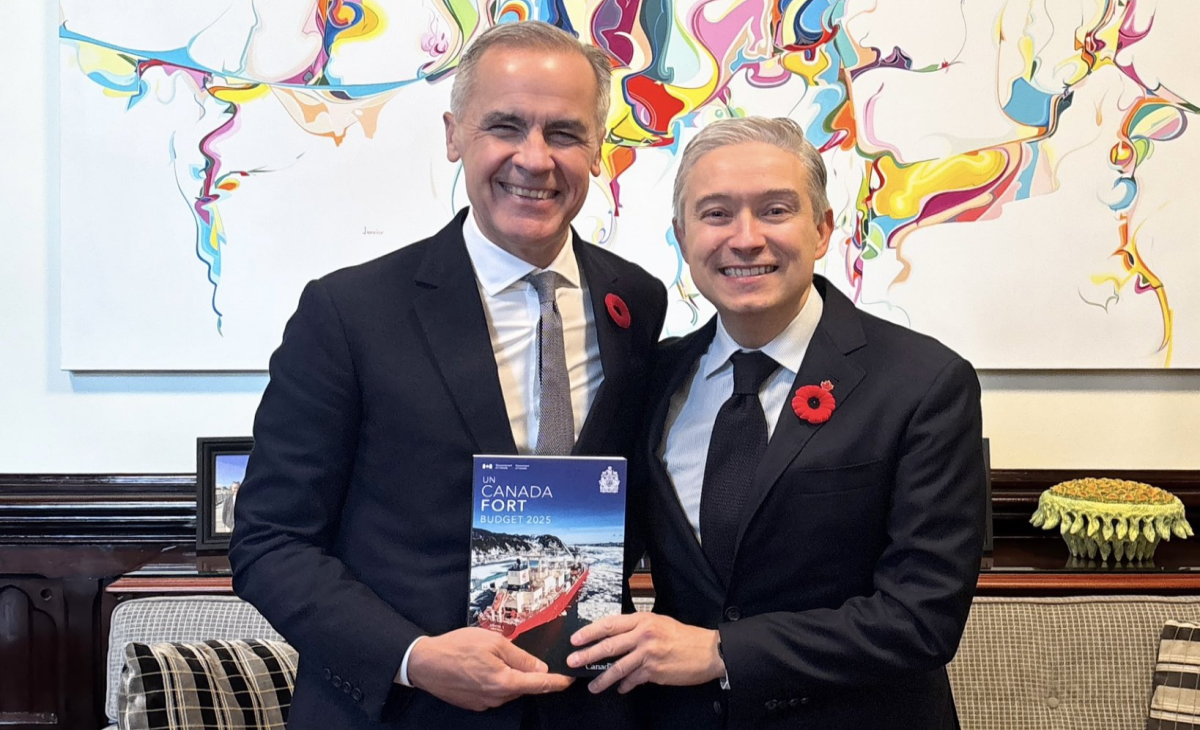
The budget had already survived two earlier confidence votes on amendments. With the main motion now passed, Finance Minister François-Philippe Champagne can introduce the budget implementation bill, which puts the budget’s policies into law.
Carney said he believes Canadians want to invest in their country, and that this budget reflects that. The Liberals have framed the fiscal plan—introduced on Nov. 4—as prioritizing “generational investments” over reducing the deficit. As a result, the deficit is projected to reach $78.3 billion in 2025–26, up significantly from the previous forecast of $42.2 billion.
The budget outlines $32.5 billion in new capital spending over five years and anticipates a $1.7 billion operating surplus by 2028–29. Overall, the 406-page budget includes $141 billion in new spending, with $51.2 billion in offsets, for a net new spend of $89.7 billion.



 Loading ...